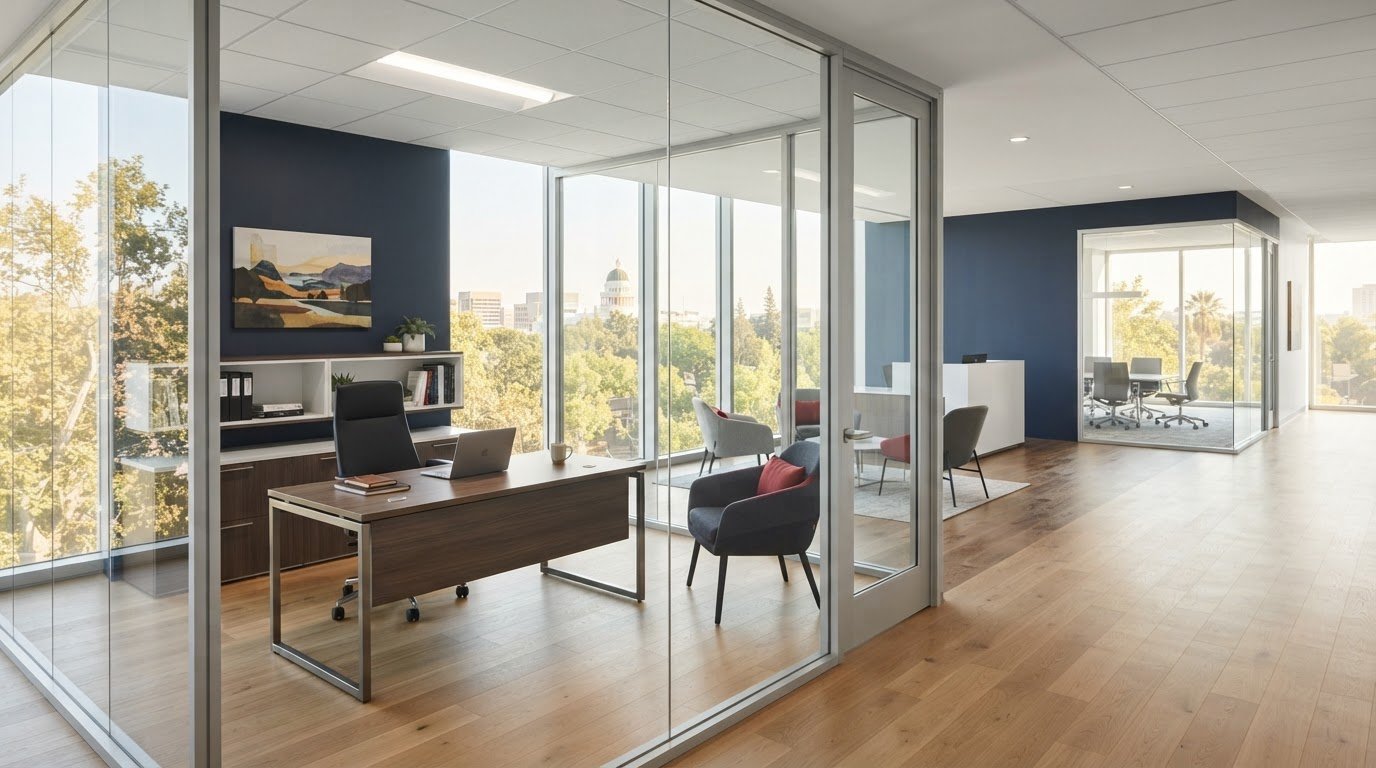
The best office for your advisory practice may not be the one with the most square footage. When comparing office space for financial advisors Sacramento, focus on whether the workspace supports concentrated work, a professional client experience, and the flexibility your practice needs. A private office or executive suite can provide a regular work base, while meeting rooms or a virtual office may suit practices with different routines.
Look beyond appearance. Client conversations call for suitable meeting arrangements and thoughtful attention to privacy, but a workspace alone does not ensure confidentiality or meet your compliance responsibilities. This guide compares Sacramento office formats and practical features, including meeting access, lease flexibility, and on-site support. Use it to match the workspace to how often you work onsite and meet clients, without taking on more space or operational complexity than you need.
Key Takeaways
- Choose office space for financial advisors Sacramento based on how often you work onsite and meet clients, not square footage alone.
- Compare privacy needs, meeting access, reception, internet, access hours, and lease flexibility to build a practical shortlist.
- Match the format to your routine: a private office for regular onsite work, an executive suite for a more expansive setup, or a virtual office for a professional business presence.
- Use a step-by-step process to assess client logistics and compare terms before choosing a workspace.
- Evaluate your privacy, record-handling, and regulatory obligations separately from the office features you select.
Why Sacramento Financial Advisors Look Beyond a Desk When Choosing Office Space
Solo advisors and small firms face a practical tradeoff: create a credible setting for client conversations without paying for more space and overhead than their work requires. The right office space for financial advisors Sacramento practices need depends on how often clients visit, how much focused work happens onsite, and whether occasional consultations can take place in a meeting room instead of a larger dedicated office.
Separate your needs into two settings. Client-facing work calls for a professional arrival and a suitable place to talk. Administrative tasks, research, and calls may need a quiet, consistent workspace. A managed office can support these operations, but no office, receptionist, or meeting room guarantees confidentiality or regulatory compliance. Advisors remain responsible for understanding and meeting the obligations that apply to their practice.
For a visual perspective on planning an advisor’s office, watch this video:
What does a financial advisor need from an office?
Start with your calendar, not the floor plan. How often do clients visit? Do appointments happen throughout the day or in scheduled blocks? Will you handle records and administrative work onsite, or mainly use the office for calls and meetings? Your answers can help distinguish a dedicated private office from a setup where a professional meeting room handles occasional in-person consultations.
Plan the client’s arrival, too: where they enter, who receives them, and how they reach the meeting area. Receptionist support can help manage calls and arrivals, while conference rooms provide a designated place for consultations. Treat these as operational supports, not assurances about privacy. Review the space itself and assess your own privacy and record-handling procedures separately.
Why location matters for Sacramento client meetings
Sacramento’s role as California’s state capital shapes its business environment; the city’s civic and regional context is outlined in Sacramento, California. For your practice, assess whether a workspace is convenient for the clients you serve and the routes you regularly travel. A central address may not be practical if most clients come from elsewhere in the region.
Compare travel time, building access, parking arrangements, and nearby services with your meeting schedule. If clients visit between other appointments, consider how easy it is to find and enter the office. Evaluate locations against your own client patterns rather than relying on broad descriptions of Sacramento business corridors.
Keep the decision grounded in three priorities: client experience, privacy needs, and flexibility. Use them to narrow your options, then compare your work patterns and location requirements. Citizens Business Center offers managed private office options in Sacramento for advisors seeking a dedicated professional base.
How to Evaluate Sacramento Office Space for Financial Advisors
Compare each workspace with the way your practice operates. A polished lobby cannot make up for a meeting setup that does not fit your schedule or internet that cannot support your daily work. To evaluate office space for financial advisors Sacramento practices can use effectively, separate must-haves from conveniences and rate every option against the same criteria.
A useful office comparison starts with recurring work, not appearances alone.
| Factor | What to assess | Priority test |
|---|---|---|
| Privacy needs | Can you work without routine interruptions? Does the layout suit the conversations and records you handle? | Must-have if your work requires a dedicated, quiet area. Assess your own privacy procedures separately. |
| Meeting access | Is there a professional room for scheduled client consultations? | Must-have when clients meet onsite; frequency can guide how often you need a room. |
| Reception | Can calls be answered in your business name, and how are visiting clients received? | Useful if you want support with calls or arrivals; weigh it against your preferred client experience. |
| Internet | Does the workspace provide high-speed internet for your regular work? | Must-have for online tasks and calls. Internet access is an operational feature, not a compliance certification. |
| Access hours | Do the stated access arrangements fit your work schedule? | Must-have if you work outside typical office hours. Secure access does not establish compliance. |
| Lease flexibility | Are month-to-month or annual options available? | Match the commitment to your practice plans and expected workspace use. |
Which office features matter for client-facing financial work?
Assess your work area and consultation setting separately. A private office can support regular onsite work, while professional conference rooms can accommodate scheduled client meetings. Consider how reception fits your process: receptionist services that answer calls in your business name can provide a consistent first point of contact. These features do not guarantee confidentiality or satisfy regulatory obligations.
During a visit, trace the client journey from arrival to meeting room. Note where a guest enters, how they find the right place, and whether the room suits a typical appointment. Check whether high-speed internet and secure access meet your operational needs. Treat both as practical features, not certifications.
How should advisors compare lease flexibility and operating support?
Month-to-month options may suit a practice whose space needs are still taking shape; an annual option may fit a steadier plan. Compare each commitment with your expected use, growth plans, and preference for predictable workspace arrangements. Include management support and shared facilities, such as kitchen access, but do not let amenities outweigh your essentials.
For local demographic and economic context, consult the Sacramento County official website as you consider the community your practice serves. Then apply one checklist across your shortlist. Citizens Business Center’s managed private office options include high-speed internet, secure 24/7 access, receptionist services, shared kitchen access, and professional conference rooms, alongside month-to-month or annual lease options.
Private Office, Executive Suite, or Virtual Office: Which Sacramento Setup Fits?
The right format depends on where you work and how often clients visit. A dedicated workspace may suit an advisor who works onsite most days, while a virtual office can fit a practice that operates primarily remotely. Consider your schedule, client-meeting frequency, and whether you need a workspace of your own every day or only occasionally.
| Workspace format | A potential fit | Consider |
|---|---|---|
| Private office | Regular onsite work and recurring client appointments | Whether a dedicated workspace supports your daily routine and meeting schedule. |
| Executive suite | A more expansive professional setup | Whether your practice needs a broader workspace arrangement than a private office. |
| Virtual office | A professional business presence while working mainly remotely | How often you need an in-person meeting space and whether it can be arranged separately. |
Use the table as a starting point, not a fixed rule. An advisor who works onsite regularly may value a private office even if most client contact happens by phone or video. If you have frequent appointments, prioritize a consistent place for meetings and focused work. An executive suite may suit a practice looking for a more expansive setup. Choose according to your actual working pattern, not which label sounds most impressive.
When does a private office make sense for an advisor?
A private office can be a practical base if you work onsite often, need a regular place for focused tasks, or hold in-person appointments on a recurring schedule. It gives you a consistent workspace, while professional conference rooms can accommodate client consultations. These features support your work, but they do not guarantee privacy. Assess the room and your own handling of sensitive conversations and records.
For office space for financial advisors Sacramento practices evaluating a private office, compare how often you will use it with the commitment and operating support included. Citizens Business Center provides managed private offices and executive suites with month-to-month or annual lease options.
When might a virtual office and meeting room be enough?
A virtual office may suit an advisor who works remotely most of the time and visits a Sacramento workspace only for scheduled appointments. It can support a professional business presence without making a dedicated onsite office central to every workday. Virtual office packages include receptionist services that answer calls in the tenant’s business name, and meeting rooms provide a place for planned consultations.
This combination may not fit every meeting pattern. If appointments are frequent, involve extended discussions, or require a consistent onsite routine, a private office or suite may be a closer fit. For occasional consultations, consider professional meeting room options alongside a virtual office. Choose the format that matches your client schedule and the time you need onsite.
A Practical Checklist for Selecting Financial Advisor Office Space in Sacramento
Use a consistent process to compare options rather than letting a polished first impression decide for you. For office space for financial advisors Sacramento practices are considering, the right fit depends on your schedule, client logistics, operating plans, and responsibilities. Work through these steps before committing.
What should an advisor clarify before comparing offices?
Map a typical workweek. Note how often you expect to work onsite, host clients, handle focused administrative tasks, and use a meeting room. Separate essential features from conveniences so optional extras do not distract from genuine requirements. Assess your practice’s privacy, record-handling, and regulatory obligations separately, using appropriate professional guidance. An office can support your operations, but it does not establish compliance.
- Map your work patterns. Estimate how regularly you will use an office and whether your onsite schedule is predictable or changes week to week. Distinguish focused work from client appointments.
- Define client needs. Consider meeting frequency, the setting your appointments require, and what visitors need to do on arrival. Think about travel routes, parking, building access, and convenience for the clients you serve.
- Shortlist workspace formats. Compare a private office, executive suite, or virtual office with meeting-room access. Focus on the options that fit your routine.
- Compare terms and support. Review lease options against your practice timeline and plans. Include internet, receptionist services, access arrangements, and shared facilities in the comparison.
- Assess the space in person. Walk through the work area and client route. Consider whether the meeting setup and day-to-day access fit your schedule, and note any details that affect your decision.
How can advisors assess a workspace before committing?
Evaluate details a listing cannot show. Observe how a guest enters, finds the meeting area, and reaches the appointment. Consider whether the room supports your consultation style and whether your own privacy and record-handling procedures suit that setting. These observations can help you judge operational fit, but they do not guarantee confidentiality or regulatory compliance.
Compare month-to-month and annual lease options with your expected timeline and operating plans. A shorter commitment may suit changing needs; an annual option may align with a steadier plan. Do not assume that amenities or a particular workspace format will resolve requirements that belong to your own advisory practice.
Local conditions can change. Verify current Sacramento market figures and regulatory statements against reliable, up-to-date sources before using them to make a decision. An undated statistic or general description is not a substitute for advice about obligations that apply to your practice.
Use this checklist to narrow your options and include professional meeting rooms in your workspace assessment. A clear comparison keeps the decision grounded in your real work patterns, not appearances alone.
How Citizens Business Center Supports Sacramento Financial Advisors
For advisors weighing a dedicated office against a conventional lease or a lighter business-presence arrangement, Citizens Business Center offers managed private offices and executive suites in Sacramento. These options provide a professional base for focused work and client-facing activity, with month-to-month or annual lease choices. Match the format and commitment to your expected onsite schedule rather than taking on more space than your practice needs.
The amenities support practical day-to-day operations. High-speed internet supports regular online work, secure 24/7 access accommodates varied schedules, and receptionist services can answer calls in your business name. Shared kitchen access and professional conference rooms are also available. These features support a professional working environment, but they do not guarantee client confidentiality or satisfy regulatory obligations. Advisors remain responsible for their own practice requirements.
What does a managed office setup provide?
Receptionist support provides a consistent way to answer calls in your business name, while a professional conference room offers a designated setting for scheduled client consultations. If you work onsite regularly, a private office can serve as a base for focused tasks between meetings. Secure 24/7 access and high-speed internet support daily operations; they are not compliance certifications or promises about privacy.
Consider how these elements work together. If clients visit periodically, conference rooms can support consultations without making every meeting part of your private office routine. If you work onsite more often, a managed private office or executive suite can provide a consistent workspace. Shared kitchen access is another practical amenity, but start with your work patterns, client needs, and the operating features you will use.
Compare Sacramento office options with your expected schedule, client-visit frequency, and preference for a dedicated setting. Then weigh the month-to-month and annual lease choices against your practice plans. These two commitment structures give you options to consider, and the right fit depends on your needs.
How can an advisor take the next step?
Before choosing, list your expected onsite days, typical meeting frequency, and essential workspace features. Use that list to decide whether a private office or executive suite better matches your routine. Keep your privacy, record-handling, and regulatory obligations distinct from office amenities: a professional setting can support operations, but it cannot replace your procedures or responsibilities.
A managed workspace can simplify the practical side of having a professional base, while flexible lease choices let you weigh commitment against your plans. Explore workspace options with Citizens Business Center to find a setup that aligns with your advisory practice.
Choose a Workspace That Can Grow With Your Practice
Your office decision does not need to define your practice forever. Treat it as a practical choice for your next stage: identify what you need now, then consider how client volume, staffing, or onsite routines could change. A workspace should support the way you serve clients without pulling focus from the work itself.
Before moving forward, write down the conditions that would make the arrangement worthwhile: the days you expect to work onsite, how you plan client meetings, and how much flexibility you want. This makes comparing office space for financial advisors Sacramento practices consider more intentional and gives you a clear basis for evaluating options as your needs evolve.
Review the workspace formats and decide which one fits your advisory practice now. Explore workspace options with Citizens Business Center to take the next step toward a professional setup.
Frequently Asked Questions
What should financial advisors look for in Sacramento office space?
Choose a workspace that supports your routine and works for the clients you serve. For office space for financial advisors Sacramento practices are considering, assess the client route, building access, parking, and whether the setting suits your meetings. Also consider noise, lighting, and whether there is room for the equipment and materials you use. Prioritize necessities before comparing optional amenities.
Is a private office better than a virtual office for a financial advisor?
Neither format is automatically better. The right choice depends on how often you work onsite and meet clients. A private office can suit an advisor who needs a consistent place for daily work or frequent in-person appointments. A virtual office may fit a mostly remote practice that needs a professional business presence and occasional meeting space. Consider your schedule over a typical month, not just an unusually busy week.
Can a financial advisor use a business center for client meetings?
Yes. A business center can provide a professional setting when its meeting room suits the appointment. Citizens Business Center offers conference rooms for client consultations. Plan how the client will find the meeting area and allow time for arrival and setup. For appointments involving sensitive topics, consider the room environment and your own procedures rather than assuming the setting ensures confidentiality.
How can Sacramento advisors assess whether an office supports client privacy?
Assess the space in person rather than relying only on a listing or floor plan. During a visit, listen for nearby conversations, check whether voices carry beyond the room, and consider whether screens or documents could be visible to passersby. Think through how you will handle paperwork and devices during and after appointments. These observations can reveal practical concerns, but no office inspection guarantees confidentiality.
Do financial advisors need a dedicated office to meet clients professionally?
No. An advisor who meets clients onsite occasionally may be able to use a professional meeting room without maintaining a dedicated office. The key is whether the arrangement fits the frequency, format, and preparation needs of those appointments. If meetings become more regular or you need a consistent place to work between sessions, compare that pattern with the value of a dedicated workspace.
What is the difference between a private office and an executive suite?
A private office generally refers to a dedicated office, while an executive suite suggests a more expansive office setup. Layouts and inclusions can vary, so compare the actual space, how you expect to use it, and the facilities included in the arrangement. A private office may be sufficient for a solo advisor; a broader setup may suit a growing practice or team.
Can an office space guarantee that a financial advisor meets compliance requirements?
No. An office can support daily operations, but it cannot guarantee that an advisor meets applicable compliance requirements. Those responsibilities depend on the advisor’s practice and obligations, not just the workspace. Assess your privacy, record-handling, and other relevant procedures separately, and seek qualified professional guidance where needed. Treat features such as controlled building access or a private room as facility characteristics, not compliance certifications or substitutes for your own processes.