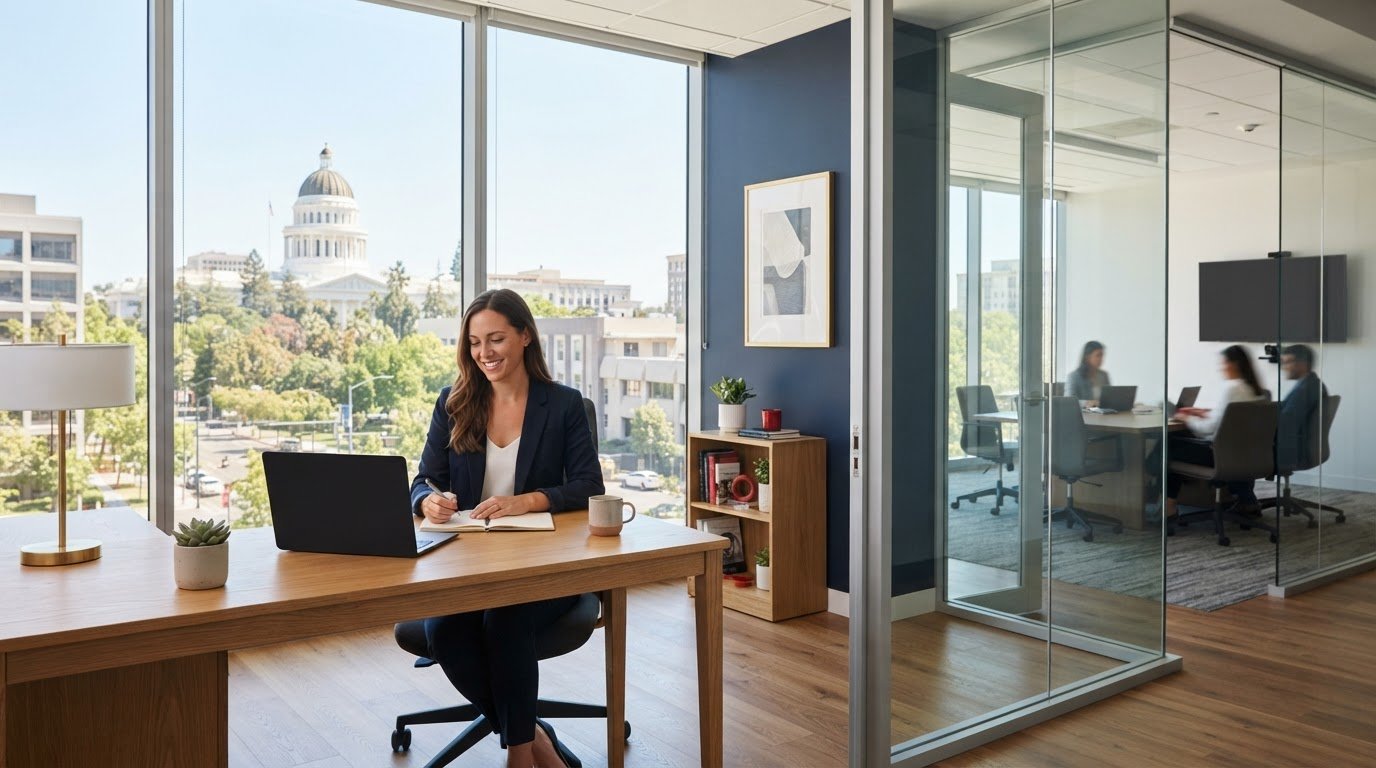
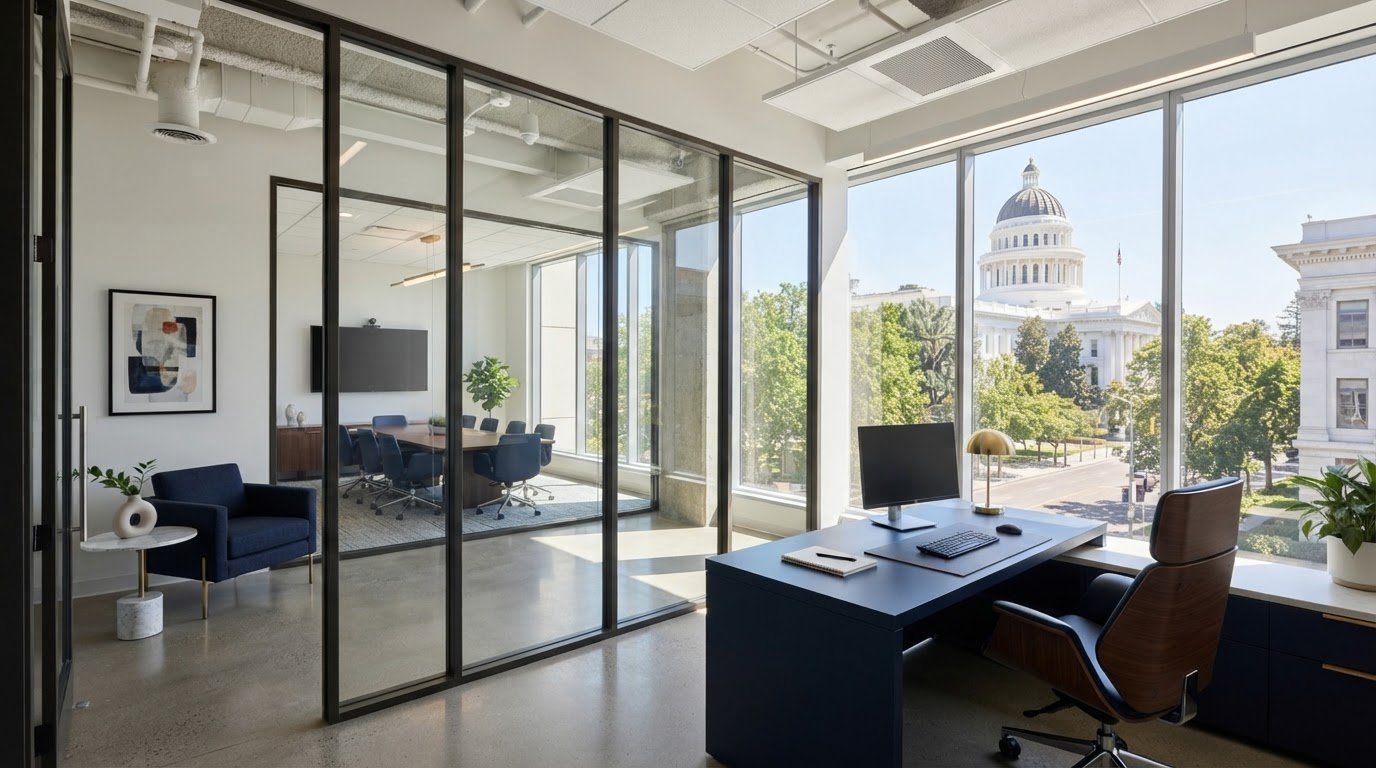
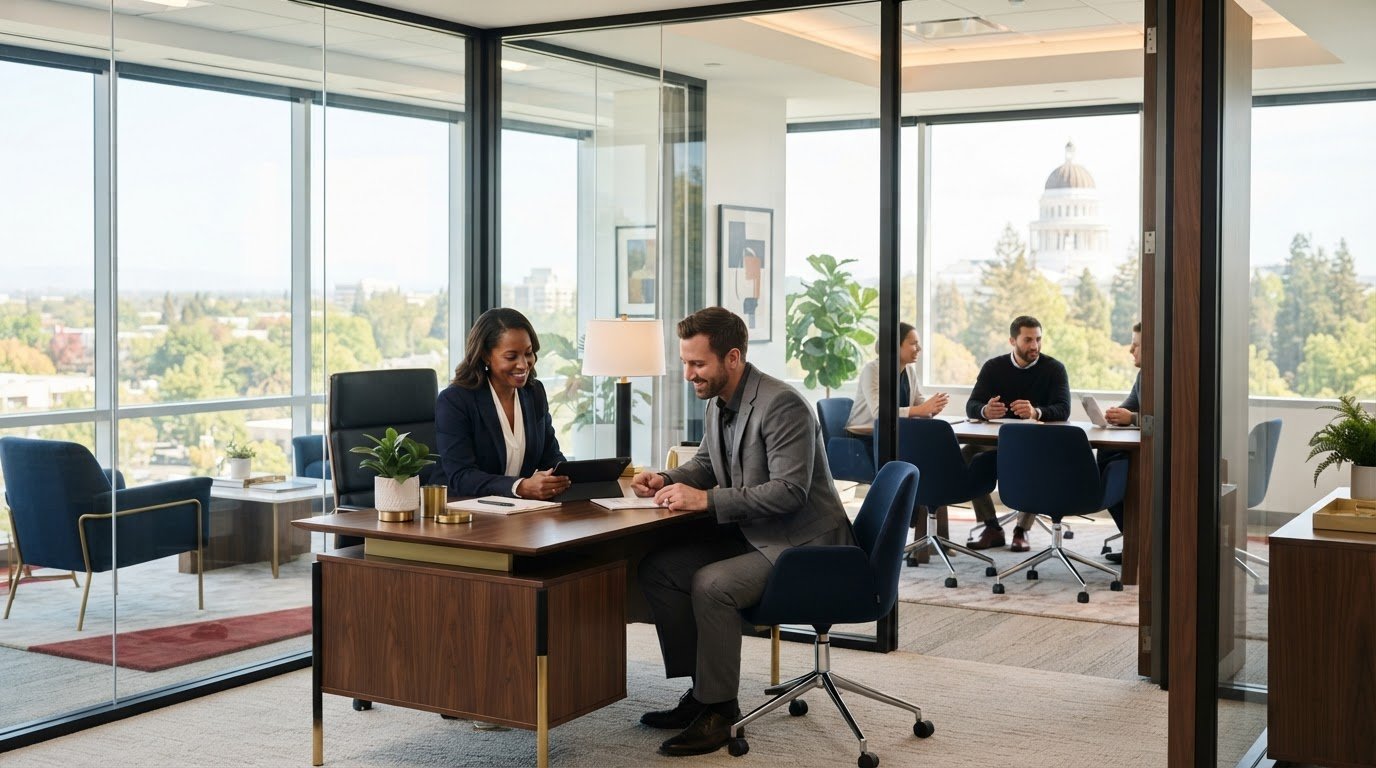
The room’s location and included amenities matter as much as the booking itself. When arranging a boardroom rental in Sacramento, compare the full booking details, including equipment, services, and parking, rather than focusing only on the room rate. Your presentation needs and how attendees will arrive also affect how practical a space is.
A listed room rate does not always cover every item you need. Costs can depend on room size, booking duration, location, and requested extras. The right fit also depends on how your team will use the space.
This guide explains what can affect meeting-space costs, how to plan a booking, and how to compare Sacramento locations, layouts, amenities, and equipment. Use these criteria to plan a client meeting, workshop, or board discussion and choose a space that supports the work without avoidable logistical complications.
Key Takeaways
- Compare the full booking setup, including parking, kitchen access, and presentation equipment, so extra needs don’t become unexpected costs.
- Plan ahead based on the meeting format: small meetings, workshops, and AV-heavy sessions have different booking windows.
- Match the room to your expected attendance and meeting duration, then consider how the layout will support the work.
- Weigh Sacramento locations by attendee travel needs, access to transit, and the convenience of arriving by car.
- Use a focused checklist to compare amenities and logistics before choosing a room for your next business meeting.
Parking, kitchens, and presentation equipment
Catering, parking, and reception services vary among Sacramento venues. Review the booking details to see what is included, what is optional, and what you must arrange separately. Treat each as a distinct planning item. A room that suits a short discussion may need different support for a full-day workshop, especially if attendees drive or need meals on site.
Start with the venue location and attendee travel. A Midtown Sacramento address may suit guests already downtown, while a venue near a transit stop can reduce reliance on parking. For drivers, confirm where to park, how to reach the entrance, and any access instructions. Compare these details with the meeting start and finish times. An address is only practical if attendees can find the entrance easily.
Accessibility deserves a practical review, too. Map the route from the drop-off point or parking area to the meeting room. Consider step-free entry, elevators, doorways, and the route to restrooms. If a guest uses mobility aids, those details can shape whether the room is workable. Use the Sacramento meeting-room page as one reference while you assess the space and travel requirements.
- Parking: Identify whether parking is on site, nearby, or street-based. Consider the walking route and guest arrival instructions.
- Transit: Note nearby transit access and how attendees will travel from the stop to the entrance.
- Kitchen access: Determine whether the room has kitchen access, and plan how drinks, snacks, or meals will be served.
- Presentation equipment: Match the equipment to the agenda, such as a screen for slides or a reliable connection for remote participants.
Equipment and services can affect the booking cost. For a Sacramento Area Council of Governments (SACOG) meeting-room reservation, additional equipment, services, or amenities may involve extra fees. List your requirements before comparing venues. A presentation needs a display and compatible connection; a hybrid discussion also needs suitable audio and Wi-Fi. Clarify who handles setup and whether the layout gives everyone a clear view.
Make a short arrival and setup checklist. Include the entrance, parking instructions, transit route, meal arrangements, and presentation needs. An office manager can share the details with attendees and assign someone to test the display before the meeting. This preparation keeps logistics from cutting into the agenda.
When to book a conference room in Sacramento?
Choose the booking window after you know the attendance, room layout, and equipment needs. For small Sacramento meetings of 2-8 people, book a standard conference room 2-4 weeks ahead. That gives you time to compare room sizes and seating arrangements without planning around a large event’s logistics.
Capacity is about more than how many chairs fit in a room. A boardroom layout needs clear sightlines, enough space to get in and out of seats, and room for laptops or presentation materials. A listing may state maximum occupancy, but usable capacity depends on the meeting format. A table discussion, for example, needs a different arrangement from a presentation where attendees face a screen.
For a workshop or offsite with 8-30 people, booking 4-8 weeks ahead is recommended when you need a specific layout or wall space. For a client-facing or hybrid meeting requiring audiovisual equipment and Wi-Fi, allow 6-10 weeks. Conference-style programs with multiple rooms, catering, and complex logistics call for a longer lead time of 6-12+ months.
- Board discussion: Count attendees, then consider whether each person needs a chair at the table or a clear view of shared materials.
- Workshop: Match capacity to the planned layout, including space for collaboration and any wall displays.
- Hybrid meeting: Include presenters and remote-participant equipment in the room plan, not just the in-person headcount.
- Multi-room program: Coordinate each room’s attendance, schedule, and setup as one booking plan.
Before choosing a room, note the expected attendance and meeting format. Compare the stated capacity with the layout you need. If the group only fits when chairs are tightly arranged, there may be too little room to move or use materials. For collaboration, prioritize table access and conversation; for a presentation, focus on sightlines and screen placement.
Demand for a particular setup can influence how early to reserve. A standard meeting for 2-8 people has a shorter recommended booking window than a workshop needing wall space or a hybrid session requiring AV and Wi-Fi. Set the date first, define the room’s working capacity, and then reserve according to the most complex requirement. That sequence helps prevent a suitable date from being paired with an unsuitable room.
Typical booking duration and attendance
A typical Sacramento meeting-room booking lasts 5 hours and includes 8 attendees. Booking, cancellation, and deposit terms depend on the venue agreement; for a SACOG room reservation, the remaining balance is due 30 days before the event.
Hourly and Daily Booking
Choose an hourly booking for a focused client discussion, interview, or short presentation. A day booking may suit sessions with several agenda blocks, breaks, or setup needs. Sacramento bookings commonly last 5 hours, so compare the planned agenda with the booking period before selecting a room.
Request enough time for the full event, not just the speaking portion. Include arrival, equipment setup, breaks, and wrap-up. A presentation lasting several hours may require room access before attendees arrive. Include amenities and setup tasks in your inquiry so the venue can respond to the complete schedule.
Booking Lead Times and Popular Times
How far ahead to book depends on the meeting format and space requirements. A small meeting, a workshop with a specific layout, and a client presentation with AV all have different planning needs. Once the date, attendance, and setup are clear, begin making inquiries.
Sacramento meeting-room bookings most often start between 12:00 PM and 1:00 PM. If your agenda can shift, compare other start times against attendee travel and preparation needs. A midday start may suit a discussion with a lunch break, while an earlier start can leave more time for presentations and follow-up.
Before sending an inquiry, prepare a concise event brief. Include the date, start and end times, expected attendance, room layout, and equipment needs. Note whether remote participants or scheduled breaks are involved. These details help the venue assess the request and identify anything that needs separate arrangements.
- Attendance: State the expected number of people and whether it may change.
- Schedule: Include setup, meeting time, breaks, and room-clearance time.
- Format: Describe whether the session involves discussion, collaboration, or presentations.
- Terms: Review the booking agreement for payment timing, deposits, and cancellation rules.
Ask for the full booking terms in writing before confirming. SACOG requires the remaining balance for a meeting-room reservation 30 days before the event. That payment deadline is separate from deposit and cancellation terms, which the agreement should explain. Keep the confirmation with the final agenda so the client contact and event organizer share the same schedule.
Sacramento boardroom rental locations
Hotels, coworking spaces, and conference centers suit different meeting priorities. Compare room setup, guest access, catering, internet needs, and travel routes when choosing a Sacramento venue.
Venue Types for Boardroom Rentals
A hotel may suit a meeting where lodging or catering coordination matters. A coworking space can work for a smaller discussion that needs a professional workspace. A conference center may suit a structured program, multiple sessions, or a dedicated presentation area. These are starting points, not guarantees of what an individual venue includes.
Compare each booking with your agenda. For a client presentation, prioritize privacy, internet access, and a clear view of the screen. For a creative workshop, consider space for group work and materials. For a catered discussion, establish how food service fits the room schedule. Choose the venue type that supports the meeting’s actual tasks.
Location and Transit Proximity
For a downtown Sacramento meeting, consider how attendees will travel from offices, hotels, or transit stops. If guests are flying into Sacramento International Airport, compare the route with their arrival plans. A central address alone does not ensure easy access. Map the trip, including the final walk to the entrance.
Transit access may matter more than nearby parking when attendees do not have cars. Share the venue address and entrance details with invitees, then review routes from their likely starting points. For a mixed group, weigh transit, driving, and airport transfers together rather than planning around just one traveler.
Use a location-first comparison to narrow down Sacramento options. List where attendees are coming from, such as downtown offices, the airport, or nearby communities. Identify the main travel method for each group, then compare how easily participants can reach the same entrance at the scheduled time. This can reveal when a less central room better suits the group.
- Hotels: Compare lodging convenience, meeting privacy, catering arrangements, and the room’s business setup.
- Coworking spaces: Review guest entry, room separation, internet access, and suitability for the planned discussion.
- Conference centers: Assess how the venue handles presentations, scheduled sessions, and any need for multiple meeting spaces.
Before choosing a venue, write down three priorities: travel access, room function, and supporting amenities. A client meeting with out-of-town guests, for example, might prioritize airport routes and a formal setting. A local planning session might favor transit access and flexible collaboration space. Use the same priorities to compare venues, then review booking details for catering, internet, and any services your agenda requires.
The key takeaway: choose a Sacramento location based on attendee routes and meeting purpose, not a neighborhood label alone. Consider downtown travel, airport access, transit, and the workspace needed once everyone arrives.
Which Sacramento boardroom rental venues are near downtown, the airport, or public transit?
Start with attendee origins, then compare room addresses with those travel routes. Downtown Sacramento may suit guests already working there, while visitors arriving through Sacramento International Airport may prioritize a straightforward route to the venue. For transit users, the nearest stop and walking route matter as much as the neighborhood name.
Compare actual addresses, not broad location labels. Search each address in a mapping tool and compare routes from downtown Sacramento, the airport, and attendees’ likely transit stops. Review the final approach to the entrance as well. A nearby stop can still involve a confusing walk, while a clear entrance makes arrival easier to coordinate.
Use these steps to shortlist locations:
- Downtown attendees: Start with their office area and compare the route to each room address.
- Airport arrivals: Map the trip from Sacramento International Airport and consider where guests will meet before the session.
- Transit riders: Identify the closest useful stop, walking route, and venue entrance.
- Mixed travel: Compare all attendee routes instead of optimizing for one group alone.
Match the route to the meeting format. A client presentation with airport arrivals may benefit from clear directions and an easy-to-find arrival point. A local planning session may be easier to attend near downtown offices or transit. For a workshop with materials, consider the distance from drop-off to the room, not just the map pin.
Get the venue’s arrival instructions before sharing the invitation. Include the street address, entrance location, transit approach, and parking guidance where relevant. Send everyone the same address and arrival notes instead of relying on informal directions. This reduces confusion for attendees coming from different parts of Sacramento.
Finally, compare the room and the route together. An appealing location cannot compensate for a space that doesn’t fit the agenda, and an excellent boardroom may be inconvenient for attendees with demanding travel routes. Use the date, attendee origins, and meeting purpose to rank your options. Then review Sacramento meeting room options as part of that location comparison.
Shortlist venues by address and attendee journey, not category alone. Compare downtown Sacramento access, the route from Sacramento International Airport, transit stops, and the final walk to the entrance. This helps you choose based on how people will actually reach the meeting.
Citizens Business Center: Private Offices
Citizens Business Center offers meeting rooms for Sacramento businesses seeking a professional setting for discussions, presentations, or client meetings. If you also need a regular place to work, Private Offices and Executive Suites provide options beyond occasional room bookings. A Virtual Office can suit businesses seeking a professional presence without a dedicated office.
Meeting room users can benefit from professional conference rooms, high-speed internet, secure access, and on-site parking. Choose the arrangement that fits your working pattern, whether you need a private workspace or a room for a scheduled business meeting.
Contact Citizens Business Center to discuss the right workspace for your needs.
Choose a workspace that fits what comes next
A meeting may be a one-time need or part of a wider change in how your business works. If you’re considering a boardroom rental in Sacramento, think beyond the next calendar invitation: might your team also benefit from a dedicated workspace or a professional business presence without a full-time office? Matching the space to your plans can make the decision more useful over time.
Citizens Business Center offers Private Offices, Executive Suites, and Virtual Office options for different working arrangements. Consider which setup best supports your next business step, then explore the available options directly.
Contact Citizens Business Center to discuss a workspace that suits your needs. Make your next meeting a confident step forward.
Frequently Asked Questions
Are there hidden fees or extra costs with Sacramento meeting spaces?
Extra charges may apply when a reservation includes additional equipment, services, or amenities. For example, SACOG meeting-room reservations may incur extra charges for these items. Review the booking terms to understand what the room includes and which requests are billed separately. Compare parking, catering, presentation equipment, and setup as separate items so you can understand the full arrangement before confirming.
How much does a meeting room cost to rent in Sacramento?
Sacramento meeting-room costs depend on the room, booking duration, location, and requested services. The total depends on those factors and is provided after a quote request. A useful comparison starts with your agenda: a short discussion may need fewer arrangements than a client presentation with equipment or catering. Compare the complete booking scope rather than judging options by a room rate alone.
What amenities are most important for a productive meeting?
Prioritize amenities that support the agenda and reduce interruptions. A presentation may need a screen, suitable connections, and reliable internet; a discussion may benefit more from a comfortable table setup and refreshments. For a hybrid session, consider audio and connectivity alongside the room layout. List the essentials first, then distinguish must-haves from conveniences when reviewing options.
What venues offer boardroom rentals in Sacramento, California?
Sacramento options include hotels, coworking spaces, conference centers, and professional business centers with meeting rooms. A hotel may suit a meeting tied to guest lodging, while a conference center can accommodate a structured program. For a smaller business discussion, a dedicated meeting room may offer a focused setting. Citizens Business Center provides professional conference rooms for presentations and client consultations in Sacramento.
What is the hourly or daily cost to rent a boardroom in Sacramento?
Hourly and daily totals vary with the room, reservation length, location, and added requirements. The price depends on the booking details and is provided after a quote request. For a clear comparison, estimate how much room time the event needs, including setup and wrap-up, then account for any presentation equipment or other extras. This helps compare an hourly reservation with a longer booking on equal terms.
How many people can Sacramento boardroom rental venues accommodate?
Capacity varies by room and seating arrangement, so use the venue’s stated occupancy for your planned layout. A boardroom table may comfortably seat fewer people than a presentation arrangement. Include presenters, note-takers, and guests who need room for materials. Consider movement and sightlines too, not only whether everyone can be assigned a chair.
What amenities are included with Sacramento boardroom rentals, such as AV equipment and Wi-Fi?
Included amenities vary by venue and reservation. Some Sacramento meeting spaces provide internet and presentation equipment, while other services or equipment may cost extra. Citizens Business Center’s meeting rooms include high-speed internet and are equipped for business presentations. Before planning a hybrid presentation, identify the equipment and connections your format needs, then distinguish included features from optional extras in the booking details.
Can you rent a boardroom in Sacramento for a few hours or on short notice?
A booking for a few hours can suit a focused interview, client discussion, or presentation. Short-notice reservations depend on the room schedule and venue booking process. For a clear request, provide the date, start and end times, expected attendance, and setup requirements together. If your schedule is flexible, include alternative times to give the venue more than one possible booking window.