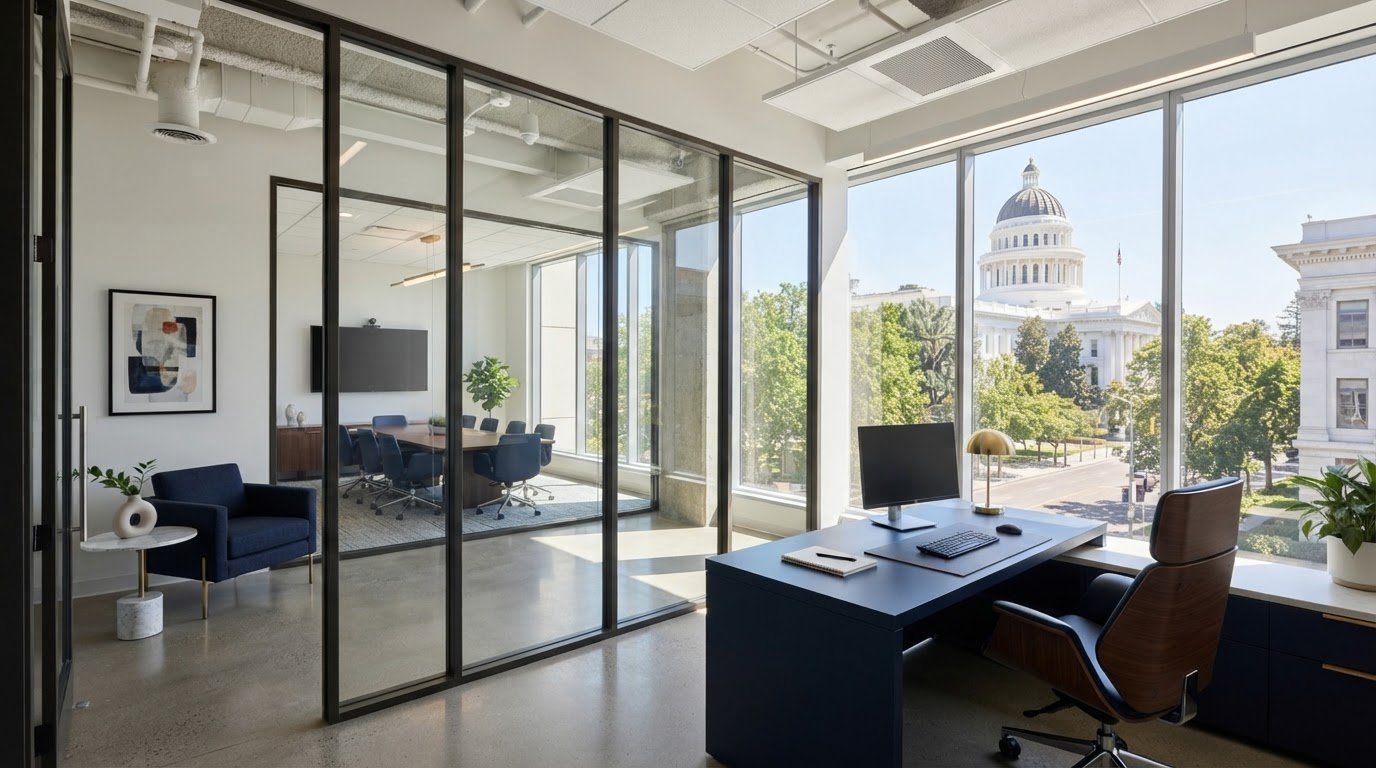
The quickest office setup isn’t automatically the right fit. Quick setup office space in Sacramento can mean choosing a workspace that’s ready for your routine, with private access and shared amenities that support your work. Check the access hours and services included so the setup fits your business day.
You want a professional place to work without a long-term commitment or the burden of managing every office detail. This guide explains Sacramento workspace options, what a managed office can include, and how to compare private access, shared facilities, and business support. Use the practical checklist to choose a setup that fits your work and schedule.
Key Takeaways
- Compare private offices, executive suites, virtual offices, and meeting rooms to match the workspace to how you work.
- Review monthly rental terms and the details that shape the commitment before choosing a space.
- Consider when you need private-office access and how business hours fit your working schedule.
- Identify which shared amenities and administrative support will reduce day-to-day office tasks.
- Use your need for privacy, flexibility, and in-person meeting space to narrow down the right Sacramento option.
Shared amenities and administrative support
In Sacramento, a managed office can bring workspace, shared facilities, and practical business support together. Compare the included services with anything your business would need to arrange separately.
Included Business Amenities
Review the amenity list alongside your daily routine. High-speed internet, secure access, on-site parking, conference facilities, and a shared kitchen can reduce separate office tasks. Receptionist services may also support a professional arrival for visitors. For example, a team hosting client meetings should prioritize conference access, while a solo professional may value reliable internet and a quiet place to work.
For furnished, move-in-ready workspace in Sacramento, compare executive suites and serviced offices. Check that the listing specifically describes a furnished private office and spells out the included services. A managed workspace label alone doesn’t tell you whether the space is ready for your workday.
When comparing Sacramento locations, assess your needs for transit, parking, and everyday amenities. Downtown and Midtown are possible starting points, but check the specific block, nearby transit stops, parking arrangements, and local services. Access can vary within the same neighborhood.
Shared amenities work best when their use is clear. Confirm whether conference facilities are shared, how reservations work, and whether kitchen access fits your workday. For administrative support, identify which routine tasks reception staff handle, such as greeting visitors or receiving deliveries. These details help distinguish useful support from facilities that rarely match your team’s needs.
Internet, Phone, Mail, and Utilities
How quickly you can set up internet, phone, mail, and utilities in a Sacramento office depends on the building’s connections and the services included. Start with a list of what your business needs, then separate what the workspace already provides from what you need to arrange.
A managed workspace may include internet, while phone service can require separate setup depending on your system. Mail handling depends on your chosen arrangement, such as a business mailbox or reception service. Check the agreement to see how utilities are handled, and identify who is responsible for each service before planning your move.
Keep setup on track with a simple sequence: list the services you need, confirm what the workspace provides, then schedule any separate installations or account changes. If you’re transferring an existing phone number, coordinate that with your phone provider alongside internet setup. One checklist for internet, phone, mail, and utilities helps prevent missed tasks from disrupting your first workday.
Compare the full amenity package with the way you work. A client-facing business may prioritize reception and meeting rooms; a remote team may focus on high-speed internet, secure entry, and shared facilities. A clear list of included services makes the move-in decision more practical.
Business hours and private-office access
Office access and reception hours are separate details. A Sacramento workspace may offer secure tenant entry beyond the hours when reception is staffed, so compare the access arrangement with your schedule. Check how tenants enter, how visitors are received, and which areas they can use outside staffed hours.
Which Sacramento coworking spaces offer private offices available immediately? Look for serviced-office listings that explicitly describe a private room as ready for occupancy. The listing should also explain access arrangements and what furniture or services are included, so you can judge whether the space suits your first working day.
Secure 24/7 access can suit businesses that work early, finish late, or serve clients across time zones. Confirm how tenants enter, such as with an access card or code, and how visitor entry is handled. For example, a consultant hosting an evening appointment needs a clear arrival plan, not just general building access.
Reception hours matter when clients visit or deliveries need attention. Distinguish the hours when reception is staffed from the hours when tenants can enter. A business with daytime client meetings may value receptionist support, while a team with varied schedules may focus on tenant access.
Before choosing a private office, map a typical workweek. Note when your team arrives, when meetings take place, and whether anyone needs access outside standard business hours. Compare those needs with the workspace’s stated schedule. This can reveal access constraints before they affect a client meeting or an early start.
Check the practical details in order: how tenants enter, access hours, guest procedures, and access to shared areas. Include situations such as bringing equipment or meeting clients. A private room supports focused work, but entry rules still affect how smoothly the wider office routine runs.
For a quick move, look for listings that state current availability and describe the office setup. “Available” doesn’t necessarily mean the room is furnished and ready for work. Compare the stated move-in condition with your needs, including a desk, secure entry, and privacy for calls.
Businesses seeking a dedicated room can compare private office options against their schedule and visitor needs. Choose the access pattern that fits your working hours, then account for reception and guest procedures. Those details make the difference between a room that is simply available and one that works for your daily operations.
Treat a listing as a starting point: check current availability, access hours, and whether the room’s setup meets your needs before arranging a move.
Coworking and shared workspace
In Sacramento, coworking, executive suites, and traditional office leases differ in privacy, shared facilities, and setup responsibilities. Coworking centers on shared work areas. Executive suites combine private offices with shared business facilities. A traditional lease gives a business dedicated premises to arrange around its needs.
Sacramento had 1,654 people looking for workspace in the last month. That demand makes it useful to compare the working arrangement, not just the room. A freelancer who needs occasional desk access may value a shared setting. A consultant meeting clients regularly may prefer a private office and reserved meeting space.
Shared workspaces bring different businesses into common areas, which can suit people looking for a flexible place to work. They may offer less control over noise, visitor flow, and where calls take place. For example, a remote employee handling confidential client calls may need more privacy than a shared desk provides.
An executive suite generally combines a private office with shared facilities, such as meeting rooms or reception. This can give a small team a dedicated work area without requiring it to manage every shared-space task. Compare privacy, access, and facility use with your team’s schedule.
A traditional office lease gives a business a dedicated location to arrange around its operations, but the business must coordinate setup and workspace responsibilities. A growing team that needs its own layout may value that control, while a solo professional may find the setup work unnecessary.
Use these steps to compare the three models:
- List the work that requires a private room, such as client calls or focused tasks.
- Identify which shared facilities your team would use, such as meeting rooms.
- Map your expected schedule and decide how much access flexibility matters.
- Separate workspace services from tasks your business must manage itself.
Test your shortlist against a typical workday. Picture arriving, handling a call, meeting a client, and securing equipment before leaving. If those steps work in a shared environment, coworking may suit you. If you need privacy throughout the day, compare private office options.
Compare the full terms, not just the workspace label. Check how each arrangement handles visitors, shared rooms, and administrative support. This helps Sacramento businesses choose a setup that fits their work without assuming every shared workspace offers the same services.
Businesses should choose a format that fits the work they actually do. Compare room capacity with your team’s meeting needs to decide whether occasional room bookings are enough or you need a dedicated office.
Check booking terms alongside the room details before making plans. Bookings for a day or less have a 24-hour cancellation period. That condition matters when meetings may change, so consider how certain the schedule is and whether a booked room suits the expected use. A workspace decision can account for both everyday work and the private space needed for specific conversations.
Monthly workspace rentals
A monthly rental can give Sacramento businesses a shorter commitment than a traditional long-term lease. Before choosing a workspace, compare the rental period, included services, payment schedule, deposit terms, and cancellation process. These details shape both your move-in plan and the cost of changing or ending the arrangement.
What lease terms, deposits, and cancellation rules apply to flexible offices in Sacramento? Terms depend on the rental agreement, so review its initial period, renewal process, deposit conditions, and notice requirements. For monthly or longer transactions, guests can cancel with 30 days’ notice after the initial term; hosts must give 60 days’ cancellation notice.
A deposit is separate from recurring rent. Read the written terms to understand when it is due, what conditions affect its return, and how the agreement handles damage or outstanding charges. If you’re moving in equipment, check how the office’s condition is recorded at move-in and move-out.
Cancellation timing deserves attention before signing. The 30-day guest notice applies after the initial term, so identify that term’s end date and the required notice method. The host notice period is 60 days for monthly or longer transactions. Put the relevant dates in a calendar to plan a move without overlooking the agreement’s timing.
Compare monthly workspace rentals using a consistent checklist:
- Identify the initial rental term and renewal process.
- Review deposit amount, payment timing, and return conditions.
- Note the guest cancellation notice period and when it begins.
- Record the host’s cancellation notice period for monthly or longer transactions.
- Separate included services from expenses your business arranges independently.
A small firm expecting a project-based team may value a monthly arrangement. A business with stable staffing may prefer an annual option if it expects to use the space consistently. Rather than comparing monthly and annual terms in isolation, consider how long you need the space and what changing plans would involve.
Consider how your space needs could change. A growing team may need a larger room, while a consultant may later need less in-person workspace. Read the agreement’s terms for changes to the rented space, renewal, and move-out. This connects the rental period to your business plans rather than an assumed timeline.
Before committing, summarize the agreement’s dates, deposit conditions, included services, and cancellation steps on one page. Use it to compare Sacramento options side by side. A clear record makes it easier to see which rental terms suit your schedule, budget planning, and expected office use.
What types of quick-setup office space are available in Sacramento?
Sacramento businesses can choose among private offices, executive suites, virtual offices, and meeting rooms. Each serves a different work pattern. The right option depends on whether you need a dedicated room, a professional business presence, or space for occasional meetings.
A private office provides a dedicated place for focused work. It can suit a consultant who needs privacy for calls or a small team working together in person. Compare the room’s setup, access, and included services before planning a move. Availability alone doesn’t tell you what furniture or equipment is provided.
Executive suites combine private workspace with shared business facilities. This can suit a small firm that wants a dedicated office without managing every part of a standalone location. Consider how your team will use meeting rooms, reception, and shared facilities. A client-facing business, for example, may value a professional welcome as much as a private workroom.
A virtual office supports business needs without providing a daily personal workspace. It can suit a remote professional who wants a business address or mail handling while working elsewhere. Unlike a private office, a virtual office supports business presence and mail needs rather than everyday desk work.
Meeting rooms provide scheduled space for specific occasions, such as a client presentation or team planning session. They can complement remote work when a business needs in-person collaboration but not a permanent office. Consider how often you meet, the privacy you need, and the equipment required for each session.
Use this practical comparison to narrow your options:
- Choose a private office when daily privacy and a dedicated work area matter.
- Consider an executive suite when you need private space plus shared facilities.
- Explore a virtual office when address or mail needs outweigh daily workspace.
- Use meeting rooms when in-person sessions happen occasionally.
A Sacramento consultant working remotely might use a virtual office for business presence and book a meeting room for client sessions. A small team that collaborates daily may prefer a private office. These examples show why your work routine matters more than the workspace label.
Before deciding, list your essential tasks, expected in-person days, and visitor needs. Match each requirement to a workspace type, then compare access, included services, and rental terms. This helps you find quick setup office space in Sacramento that supports your actual operations rather than solving only part of the need.
Citizens Business Center: Private Offices
Citizens Business Center offers Sacramento businesses workspace options for different needs. Choose a Private Office or Executive Suite for a dedicated work setting, a Virtual Office for business presence without a daily office, or Meeting Rooms for scheduled in-person sessions.
Private Offices and Executive Suites can suit small businesses or remote professionals who need a professional place to work. The managed environment includes high-speed internet, secure 24/7 access, on-site parking, and conference facilities. If your work is primarily remote, a Virtual Office or Business Mailbox may better match your day-to-day needs.
Compare the options against your work routine, privacy needs, and meeting schedule. For details on a workspace that fits your business, contact Citizens Business Center.
Choose a workspace that supports your next move
Before committing, turn your priorities into a short decision brief. Decide whether you need a dedicated place for focused work, a professional business presence, or meeting space for occasional in-person conversations. Compare each option with that brief and your team’s routine. The right quick setup office space in Sacramento should support how your business operates now and leave your next step easy to plan.
Citizens Business Center offers Private Offices and Executive Suites for businesses seeking dedicated workspace, along with a Virtual Office for business presence without a daily office. Choose the option that fits the role you need it to fill, and keep your priorities clear as you decide.
Ready to explore a workspace for your business? Contact Citizens Business Center to take the next step. Choose a setup that gives your work a professional place to grow.
Frequently Asked Questions
What is included in Sacramento coworking and serviced office memberships?
Workspace memberships in Sacramento don’t all include the same services. Coworking may focus on shared desks and common areas, while a serviced office may include a private room and selected business amenities. Compare the written inclusions with your daily needs, such as a desk for regular work, privacy for calls, or meeting-room access. Review each arrangement on its own terms rather than assuming services are universal.
What should businesses check before booking a furnished office in Sacramento?
Check whether the furnishings suit your work, not just whether a room is labeled furnished. Review the desk and chair, storage, outlets, lighting, and room for your equipment. If you use monitors or presentation equipment, plan where they will go. Also check visitor procedures, access arrangements, and the move-in condition so your team knows what to expect.
Which Sacramento coworking spaces offer private offices available immediately?
Look for serviced-office listings that state a private room is ready to occupy. Check the access arrangements and included furniture or services.
Which Sacramento office providers offer furnished, move-in-ready spaces?
Compare executive suites and serviced offices. Look for listings that describe furnished offices and identify included services.
Which Sacramento neighborhoods have the best access to transit, parking, and amenities for office space?
Downtown and Midtown are useful starting points. Compare the specific block, nearby transit stops, parking arrangements, and everyday amenities, since access can vary within each neighborhood.